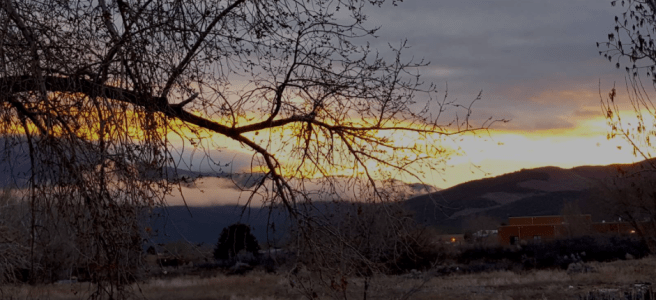
[Update] Lost Notebook is Found

I evidently left it in a break room at work. Maybe people read it, maybe not? There’s something to say for having messy handwriting, that only the most determined will try to wade through a slew of retrograde cursive…

So, was it so important? Yes, to me it was.

Maybe an excerpt:

In a cave she walked after turning away, and the old man followed, walking his dog whose snout skimmed the wet sand and the rolling cold wash of the sea. The cove was set away from the beach proper, where large glacial erratics had been rolled into place to form a getty that stretched out about one-quarter mile into the sea.

As she strolled, her bare thighs wet with the splash of waves that deliciously licked them, her toes touched her shadows. Her feet were stark white under the sun. She did not look back. She knew already that he would follow abidingly, as readily as the dog. By the time she reached the getty, she began her ascent over the stones.

The old man stopped, unwilling at first to climb, but to stand and watch her lift her long tawny legs over the wet-dark boulders. The sea rolled around the old man’s shins and then his knees. The dog moved further away. He dropped the leash. The dog walked several feet away and sat squarely on its wet haunches shivering.

On the highest stone she stood looking at the sun, her neck craned and cheek tilted, feeling warm fingers trace the fineries of her hot skin. She closes her eyes listening to the sea. The bubbling gurgle between the rocks and the slapping hiss of the incoming tide began to sweep over the furthest reach of the getty.

For several minutes she stayed that way, as if in adoration or invocation to a god or some such pagan idolatry. Her hands unfastened the first of her garments. The straps of a thin top slipped off and dropped in a heap on the rock, her small breasts leaning into the hand of the hot sun. A strange thrill of union to her grand lineage, of legions of others like her stretched to the ancients in blind obedience to the equinox, thrilled her.

The whiteness of her face, like fire illuminating parchment, and eyes shining with no fixed color, but of all colors, and then lids rapturously closed as she sat with knees drawn like Venus in her grove, fixed to her supine posture, breasts upthrusted and sprayed of shining droplets from hand-tossed Atlantis waves, she slowly emptied a sigh into the unerring wind.

There was no mother, father, man or woman, but only the elements desirous of her as if all of it served in slavish devotion to her and her alone…”

Thanks for reading…

On Being An Outsider

And we all can claim this, of being outside the world, always looking in, wanting to be, and feeling at times happy not being, but realizing that this ‘otherness’ is you in the world distinctly lacking.

Of being talked over, trying to get a word into the tumult of the rushing seethe of a room, and nobody is listening.

I have always had the feeling of not belonging, it didn’t matter the setting. And, in not belonging, there was also the feeling of belonging with my self where nobody else wanted to be.

As a boy, the gang had ways of doing things, an understanding and invisible language that somehow eluded me.

I have been passed over and ruled out before I was ever considered in passing. Maybe they thought something was just ‘not right’ with me, and so felt it best to go with the other person. I don’t know. I wonder sometimes…

In a workplace setting, there I am again, sitting at a desk where others pass, without a word or a glance, and in retrospect it doesn’t matter (or maybe it does which is why I am writing this), but I feel this otherness, this isolation is complicit with my state of being, that it was always meant to be.

But I wasn’t completely alone. I was never lonely. I had much contentment with myself. There, alas, in the world of books, the other world opened up and invited me and made feel like I belonged. In there things made sense. People talked my language. Of this I have never disputed.

From books came a new mode of self-expression. I found that I could write with relative ease even though my grades in English classes were relatively dismal. I could not identify grammar particles for the life of me, but I could construct sentences and then paragraphs and, eventually, long spates of prose with relative ease.

With that came an understanding of the world jostled into abstraction, yet somehow making sense in a convoluted way, as if my understanding was drawn from some kind of Utopian yearning that would never mesh with the concrete ‘wants’ and ‘whys’ of the rest of society.

I see the poverty of the world stems from poverty of the mind. I see that there will never be a time when all is resolved like an alg`ebraic equation. There will always be struggle without resolve. There will be voices louder than my own shouting outrage into the whirlwind. I will always, too, not understand, and fight my own struggles, as many as are thrown at me without mercy, wonder how others have the time to do it.

I see daily the world of men, and I feel like I am not one of them though I am among them. I wonder what it is that made them that way, to assume this ‘manliness’ and tout it as superior to all else. These boasts and jostling, posturing and buried aggression. I don’t feel like I belong then even among my gender.

Nor do I feel even that I belong among my race, my species, genus or world order. There is something else unlatched from the mother spaceship of humanity that drifts e into some other orbit.

I don’t know what it is, and perhaps I will never find out. It isn’t my right or duty to find out. It is my duty to just BE.

In being there is no outside or inside. There is no rightful place. I write and conduct the order of my life out of structured consciousness that is neither inclusive or preclusive of some understanding.

I want to be like all of you, but you do not want to be like all of me. But in all of us, there is a multitude of possibilities.

There is never truly an outside. We’re all outsiders looking in to somewhere else, never feeling that we quite belong, or want to belong.

Or is there even an inside?

Taos Elegy

Sunrise: Sangre de Cristo Mts.
6:30 a.m.

Clouds like tattered rags
squat as furrowed shaman brows
over heights of lava rock and shale,
bested by Spanish conquest of
Don Fernando, yet eternal still
to endure.

A ragged coyote limps across
a field, turns warily eyeing
down Cam Del Paseo Pueblo Norte,
trotting dust into spirit clouds.

Seraphic cherub sits
on marble tombstone,
chubby chin on palm
brooding over a child’s
collection
of toys:

Matchbox cars, toy soldiers
and a plastic dinosaur.

Daughter: Mercedes E. Avila
1920-1945
sleeps like desert doll beneath
wooden frame of fence pickets.
Gopher holes tunnel
a labyrinthine network
around her,
bonding
the
living
with the dead.

Taos, New Mexico
(April 9, 2016)

The rind and the fruit.

In D.H. Lawrence’s writings, he describes the rind and the fruit as metaphor.

When one peels the rind, therein the fruit is tender, retaining its juices and seeds. Within is life, the bursting seed awaiting implantation into the soil and the redolent waves of the sun nurturing it into budding. The rind merely peels away. It is discarded. It becomes mold in the earth.

Lawrence writes of the rind in Women In Love after Anna and Will marry. They enjoy honeymoon bliss in a little cottage, absorbed in each other. All is soothing and complacent to compassion. They are, for lack of a better word, complete. Will is born anew:

He surveyed the rind of the world: houses factories, trams, the discarded rind; people scurrying about, work going on, all on the discarded surface. An earthquake (the marriage) had burst it all from the inside. It was as if the surface of the world had been broken away entirely: Ilkeston, streets, church, people, work, rule-of-the-day, all intact; and yet peeled away into unreality, leaving here exposed the inside, the reality; one’s own being, strange feelings and passions and yearnings and beliefs and aspirations, suddenly become present, revealed to the permanent bedrock, knitted one rock with the woman one loved.”

As Will slips into blissful dreamland, Anna plans a tea-party which throws Will into a tizzy.

The wonder was going to pass away again. All the love, the magnificent new order was going to be lost, she would forfeit it all for the outside things. She would admit the outside world again, she would throw away the living fruit for the ostensible rind. He began to hate this in her.

This reveals the differences between the two. She longs for outside things, the rind; he, for the living fruit that is them. It is not the tea-party per se that becomes the issue, but that the trifling matter becomes portentous of their future.

Lawrence’s metaphor of the rind is a tool for his philosophy.

This goes on within the rind. But the rind remains permanent, falsely absolute, my false absolute knowledge of good and evil. Till the work of corruption is finished; then the rind also, the public form, the civilization, the established consciousness of mankind disappears as well in the mouth of the worm, taken unutterably asunder by the hands of the angels of separation. It ceases to be, all the civilization and all the consciousness, it passes utterly away, a temporary cohesion in the flux. It was this, this rind, this persistent temporary cohesion, that was evil, that alone was evil. And it destroys us all before itself is destroyed.”

Lawrence’s “rind” is the origin of evil. It is the hope one settles for after glimpsing the rainbow, but instead takes refuge in the “rind of the world.”

Whatever form the rind appears, it must be dismantled or diminished in order to reach the fruit of the matter.

It became at last,” writes Lawrence, “a collective activity, a war, when, within the great rind of virtue we thresh destruction further and further, till our whole civilization is like a great rind full of corruption, o breaking down, a mere shell threatened with collapse upon itself.”

Then …

And the road of corruption leads back to one’s eternity.

Lawrence indulges in the fruit, where the wet pulp and soft seeds are rapacious with the sweet and bitter pulp of destiny and promulgation.

It is in his poem, “Pomegranate” that he declares:

You tell me I am wrong.
Who are you, who is anybody to tell me I am wrong?
I am not wrong.

The fleshly seeds of the pomegranate are matters of truth that remain obstinate in the light of falsity.

Or when Lawrence writes in “Figs”:

Folded upon itself, and secret unutterable,
And milky-sapped, sap that curdles milk and makes ricotta,
Sap that smells strange on your fingers, that even goats won’t taste it ;
Folded upon itself, enclosed like any Mohammedan woman,
Its nakedness all within-walls, its flowering forever unseen,
One small way of access only, and this close-curtained from the light ;
Fig, fruit of the female mystery, covert and inward,
Mediterranean fruit, with your covert nakedness,
Where everything happens invisible, flowering and fertilization, and fruiting
In the inwardness of your you, that eye will never see
Till it’s finished, and you’re over-ripe, and you burst to give up your ghost.

The cloying sweetness, its feminine essence overpowers the senses. It is all that it should be. The fruit is declarative and profound. We are righted by its righteousness and journey. The fig’s rind is peeled away and the pulp opens up sweetly with its ferment. It rewards the tongue with its truth. It rewards the soil with its seed.

The crux of the matter lies in the fruit, not the rind. The rind is the world, that binding shell that colludes the real fruit of the matter. It is rioting in Charlottesville, it is nukes in North Korea, it is the pettiness of everyday squabbles, and earthly battles we pursue instead of the living fruit of who we are and what we contain. It is this Lawrence warns of … where “the tiger rises supreme, the last brindled flame upon the darkness; the deer melts away, a bloodstained shadow received into the utter pallor of light; each having leapt forward into eternity, at opposite extremes.”

What is your rind? What is your fruit?