Thoreau on Bread

Thoreau writes in reply to H. G. O. Blake’s letter of 27 March 1848:

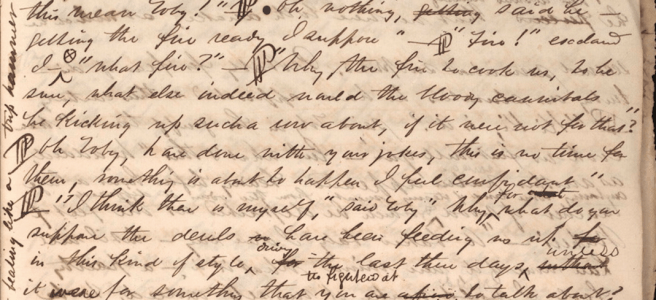
“We must have our bread.” But what is our bread? Is it baker’s bread? Methinks it should be very home-made bread. What is our meat? Is it butcher’s meat? What is that which we must have? Is that bread which we are now earning sweet? Is it not bread which has been suffered to sour, and then been sweetened with an alkali, which has undergone the vinous, acetous, and sometimes the putrid fermentation, and then been whitened with vitriol? Is this the bread which we must have? Man must earn his bread by the sweat of his brow, truly, but also by the sweat of his brain within his brow. The body can feed the body only. I have tasted but little bread in my life. It has been mere grub and provender for the most part. Of bread that nourished the brain and the heart, scarcely any. There is absolutely none even on the tables of the rich. 

“Baby Tortoise” – D.H. Lawrence

You know what it is to be born alone,
Baby tortoise!

The first day to heave your feet little by little from
the shell,
Not yet awake,
And remain lapsed on earth,
Not quite alive.

A tiny, fragile, half-animate bean.

To open your tiny beak-mouth, that looks as if it would
never open
Like some iron door;
To lift the upper hawk-beak from the lower base
And reach your skinny neck
And take your first bite at some dim bit of herbage,
Alone, small insect,
Tiny bright-eye,
Slow one.

To take your first solitary bite
And move on your slow, solitary hunt.
Your bright, dark little eye,
Your eye of a dark disturbed night,
Under its slow lid, tiny baby tortoise,
So indomitable.

No one ever heard you complain.

You draw your head forward, slowly, from your little
wimple
And set forward, slow-dragging, on your four-pinned toes,
Rowing slowly forward.
Wither away, small bird?
Rather like a baby working its limbs,
Except that you make slow, ageless progress
And a baby makes none.

The touch of sun excites you,
And the long ages, and the lingering chill
Make you pause to yawn,
Opening your impervious mouth,
Suddenly beak-shaped, and very wide, like some suddenly
gaping pincers;
Soft red tongue, and hard thin gums,
Then close the wedge of your little mountain front,
Your face, baby tortoise.

Do you wonder at the world, as slowly you turn your head
in its wimple
And look with laconic, black eyes?
Or is sleep coming over you again,
The non-life?

You are so hard to wake.

Are you able to wonder?
Or is it just your indomitable will and pride of the
first life
Looking round
And slowly pitching itself against the inertia
Which had seemed invincible?

The vast inanimate,
And the fine brilliance of your so tiny eye,
Challenger.

Nay, tiny shell-bird.
What a huge vast inanimate it is, that you must row
against,
What an incalculable inertia.

Challenger,
Little Ulysses, fore-runner,
No bigger than my thumb-nail,
Buon viaggio.

All animate creation on your shoulder,
Set forth, little Titan, under your battle-shield.
The ponderous, preponderate,
Inanimate universe;
And you are slowly moving, pioneer, you alone.

How vivid your travelling seems now, in the troubled
sunshine,
Stoic, Ulyssean atom;
Suddenly hasty, reckless, on high toes.

Voiceless little bird,
Resting your head half out of your wimple
In the slow dignity of your eternal pause.
Alone, with no sense of being alone,
And hence six times more solitary;
Fulfilled of the slow passion of pitching through
immemorial ages
Your little round house in the midst of chaos.

Over the garden earth,
Small bird,
Over the edge of all things.

Traveller,
With your tail tucked a little on one side
Like a gentleman in a long-skirted coat.

All life carried on your shoulder,
Invincible fore-runner.

On Melville’s Pierre

I have been rereading Hershel Parker’s foreword to his “Kraken” edition of Pierre. There is a compelling story of a man (Melville) driven to the brink of pure unmitigated creation on the heels of Moby-Dick, but also he is in near servitude having to pay back debts.

The letter to Nathaniel Hawthorne spills out the purity of his intent, where his mind was at and how it ultimately clashed with the marketplace.

His June 1851 letter to Hawthorne is premonitious of where the direction of his life and art were going… nowhere, at least in his lifetime:


“I did not think of Fame, a year ago, as I do now. My development has been all within a few years past. I am like one of those seeds taken out of the Egyptian Pyramids, which, after being three thousand years a seed and nothing but a seed, being planted in English soil, it developed itself, grew to greenness, and then fell to mould. So I. Until I was twenty-five, I had no development at all. From my twenty-fifth year I date my life. Three weeks have scarcely passed, at any time between then and now, that I have not unfolded within myself. But I feel that I am now come to the inmost leaf of the bulb, and that shortly the flower must fall to the mould.”

Melville is writing for himself here . . . his horse-out-of-the-stall barnstorm of prose assaults the unsuspecting mid-19th century reader and baffles the critics. They label him “crazy.”

Melville’s rendering of a bucolic setting is at once unsettling and calming:

“Not a flower stirs; the trees forget to wave; the grass itself seems to have ceased to grow; and all Nature, as if suddenly becomes conscious of her own profound mystery, and feeling no refuge from it but silence, sinks into this wonderful and indescribable repose.”

It conjures Ralph Waldo Emerson, or some such transcendentalist-type with tree-stump for a pulpit musings all a-prayer under a Concord canopy of firs and pines.

No sooner than the Emersonian vibes subside than Shakespeare is roused:

“The verdant trance lay far and wide; and through it nothing came but the brindled kine, dreamily wandering to their pastures, followed, not driven, by ruddy-cheeked, white-footed boys.”

It’s Melvillean prose poetic in its import, elucidated with certainty:

The verdant trance
lay far and wide;
and through it nothing came
but the brindled kine,
dreamily wandering to their pastures,
followed, not driven,
by ruddy-cheeked,
white-footed
boys.

For me, if the book made no sense at all, its the reality-TV thrill of Melville throwing caution to the four winds in an act of intellectual rebellion. Its Melville pissing on the marketplace. Moby-Dick was his catharsis, expelling the whirlwinds of grief and hate and proclaiming to Nathaniel Hawthorne that he was now “spotless as a lamb” after having written a “wicked book.” If only we could all undergo such radical self-therapy! Melville, self-medicated by the tempestuous whims of his artistry! Begone Valium and Paxil! Open the mind and your ass will follow… the mad earnest scribbles at the end of his beard, page after page with his door locked against domestic disturbances.

In light of this, Melville sensed with a third-eye approach the encroaching clouds of “annihilation.” Visionaries like him were not long for this world and are typically doomed to obscurity or death, or both. Certainly Melville the square peg did not fit in a country hell-bent to spearhead the world in its brick-by-brick construct of industrialism. So, in 1856, he is blunt, honest and forthright to literary comrade, Nathaniel Hawthorne: “I have pretty much made up my mind to be annihilated.”

It is an annihilation long overdue, stemming from an inflexible personal moral conflict (the same that haunted Jack Kerouac, and who saw comfort in Melville’s mindset during the writing of Pierre in the disastrous critical aftermath of Moby-Dick, when Kerouac came to his own creative crossroads sitting in a VA bed in Brooklyn, hiding from an ex-wife seeking a paternal blood test and after having written his long-scroll version of On the Road in April ’51 and now on the verge of cresting his creative solution in “sketching” resulting in his masterpiece, Visions of Cody).

What am I writing then in this blog missive? A fan letter to Herman Melville?

This is the loin-rushing thrill of a young man (or woman) excitedly extolling the aesthetic merits of a new beau . . . this is the same thrill Kerouac found in Melville’s staunch selfishness in writing for his own mind and not for the book stalls of the Victorian marketplace. This is relief and calm, that it all makes sense now after the Dostoyevskian bloodletting resulting in the kind of writing best suited for absinthe hangovers. Melville finds solace in Shakespeare and takes him in both arms as he plunges deep where only “krakens” dare to swim, in the unblinking dark of the hell-hound depths.

There is a back history that I could never hope to relay as eloquently and fresh-eyed as Hershel Parker does in Melville Biography: An Inside Narrative (I can’t recommend a book highly enough and that he has my name in his acknowledgments only binds me evermore to greatness!). Chapter 3’s “Entangled By Pierre” says it all.

Parker is entranced as a young man in the greatness of Pierre, not at a polished mahogany desk in a stifling hot classroom, but on the “naked polished linoleum kitchen floor.” The passage reminds us of finding that one book in your youth that cracked open our consciousness and released the thrill of personal discovery into our youthful spillways.

Parker is sustained by a “rapturous state” during his 1959 Christmas break. And isn’t that what we all cherish and secretly attain once more, that sustained nighttime reading marathon where there is no responsibility tomorrow, but that of personal indulgence? He had followed Moby-Dick with Pierre hoping for a similar experience, not expecting Pierre to surpass its greatness. Parker had been reading Shakespeare, much as Melville did preceding the composition of Pierre and was thereafter “hyperalert” to Shakespeare’s characters and language. Upon reading Pierre, Parker, in his own words, became “obsessed,” much as we are within the hormonal throes of a new love, when the whole world opens up and the possibilities become infinite.
Startled Mirror

Once I was a child I looked upon the world as an eyeflash of hope – shatters of stars thrown across the night sky, I said to myself that that is where I will be someday.

that is where I’ll be someday

And that I wondered about those stars, and wrote on papers, multiplying my age by tens and wondering where I would be at each point, who would I be? who would I love? who would love me? and I wondered if I would be rich? well-liked? Poor? Scorned?

I had no fears. I loved the world, even when I felt they did not love me back.

But then the first of those decades struck me – a strange ruffling wind tossing me over the sea under a night sky born anew and still there was hope because hope had yet to be born, writhing in its placenta, rueing a fierce-eyed tenacious grip, clinging to a vestige of what I felt to be the right path.

However, that path was but illusion. I walked it fearlessly, regardless of destiny. I had youth on my side, and in youth there are days to burn like tinder, one twig after another until the pile becomes depleted and we scrounge for more to keep the fire burning.

And then the people came, because I had never noticed them before. They had faces that all looked alike, as they do now, not any of significance, but rejoicing in their commonality, the pale fish-eyed thin-lipped galley slaves rowing to the rhythm of commerce, to each wanting the glimmering sheaf of light on the other shore, the other shore not their freedom, or their salvation, but what they can own, what they can have, driving picket fences into the earth to shut others out and bloat flatulently under rich fruit trees regarded itself as a bounty of the earth, and not the property of a tenant. And the ripe fruit drops and decays into the earth.

The dreams of the child become the dashed hope of the ogre-spector of adulthood. Eyes are grim, skin turns to gray, wrinkles crease a riverbed of woes across the astonished face and others, and even others still, use that frightened disbelief as another peg for commerce. Ah! With those fears, like many others, I can capitalize on vanity, insecurity and old age. I eat greed with my lust, eat lust with my greed. On Sundays I pray to be a better person, so that I can step back into the poisoned river and begin my workweek anew.

The child that wondered stands at the precipe of decades later, astonished still at his reflection, that of the startled mirror unmitigating in its refusal to reflect what we want to see. We have allowed ourselves to become slaves to numbers.

Age is our whipping post.

It has become the monster at the end of our youthful dreams. The Hegira from child to adult is but a trail of glass-shattered tears.

He turns. Lights off. Dreams no longer a melodious cargo, but an embargo on our past, taxed and regulated for the blank-face masses. We drag our feet to the grave and stand looking down into an open stinking pit. The moneymakers are waiting to push you in and take more. We have allowed ourselves to be vessels for others to capitalize on, from the individual to that Hydra called government.

Astonished we have no other recourse but to step in.

Let Me Show You …

Let me show you, she said.

She sat on the bed and opened a shoe box and removed a handful of photographs, dustwiping two and offered them smiling: a little girl on a horse; a woman seafoamed and glittering sprinting in the hot sand. ‘These are me,’ she said in a cloud of yellow morning, breathing in hot rushes an infold of warm colors and darkness and light.

She was so there she was so there … ‘these are me,’ and she knowing already that was once was, now was no more except what was captured photographically, almost a betrayal, to defy the past.

Silhouetted she entered. I smelled her before seeing her felt her before I knew her – perfume hangs the air aura-like.

I entered and saw her before I smelled her and knowing it was her and so I closed the door to her closed the door to her…

Fred accosts me on the street and asks about real estate prospects. I cannot entertain his earthly offers, your head must be in the sun, my friend, and I tell him of her, and that she is not here, she is there, across the way standing at the coastline where the picture was taken, and so I look across to a sea rush roar seducing a chain of broken islands and she is waving in the high dark where the foghorn soaks a somber deathblow bellow….

I wade to follow through a street of strangers, a sea of strangers an irrepressible tide of unkindly strangers amassed in colors and hostile energy, billowing folds of a cloth stirred by wafts of dirty hot air rushing toward me, through me searching through this world.

Is she here?

from The Malady of Death

Marguerite Duras says “in heterosexual love there’s no solution. Man and woman are irreconcilable, and it’s the doomed attempt to do the impossible, repeated in each new affair, that lends heterosexual love its grandeur.”

from Marguerite Duras’s The Malady of Death:

If I ever filmed this text I’d want the weeping by the sea to be shot in such a way that the white turmoil of the waves is seen almost simultaneously with the man’s face. There should be a correlation between the white of the sheets and the white of the sea. The sheets should be a prior image of the sea. All this by way of general suggestion.

The Malady of Death is a moving, erotic story that explores the relationship between sex, love, and death. The book is really about a soul which has died and its means of finding love through (as it seems) “meaningless” sex, often in complete silence, a strange kind of voiceless ecstasy. A man (whom the author addresses as “you”) hires a woman to spend several weeks with him by the sea where he suffers and longs to feel something, anything, in that brief period of time. The language of the text is what I would expect from Marguerite Duras: terse yet lyrical prose, moving in the way it injects simple, familiar words with the weight of emptiness and passion and suffering. I could read this book again and be moved in the same way as I was the first time. The most remarkable exchange between the man and women occurs here, perhaps my favorite lines in the entire work: “You ask how loving can happen–the emotion of loving. She answers: Perhaps a sudden lapse in the logic of the universe. She says: Through a mistake, for instance. She says: Never through an act of will. You ask: Could the emotion of loving come from other things too? She says: It can come from anything, from the flight of a night bird, from a sleep, from a dream of sleep, from the approach of death, from a word, from a crime, of itself, oneself, often without knowing how.”

On Channeling

I tell Caitlin that I “have to channel for a minute,” and begin to write, with a gathering of strange Blakean energies gather forces to launch front he tip of my tongue through my fingers and I see nothing else but what I am thinking to write, that certainly will be come a most splendid misfire, or the touchstone to some other idea, that I believe it could humble me, or even alienate me, but none the less it stays sincere and moves through the channels of the heart, there I confess through my dictate the winding and churning of an idea seeded by emotion and watered by innovation, there can be nothing else as intermediary, it can only be encouraged like wet desire and the prodding of a child through the doorway into the world…

Writing becomes an act in itself, not the night or its stars, or the sea and its waves, but the page and its words rolling back ever-certain, ever-urged toward its own shore, breaking at frothy import the intention of its well-aimed volley.

Or it misfires.

But in accidents there lies the most important discoveries. Here in the world I cocoon myself within, I harness the silken thread of divine thoughts invincible.

The result is a page broken and tumbled, like a fallen statue that once held its subject to a loftier aim, but now, reduced to rubble, foiled, only to resurrect

in time

its time

will you be there for me

will you be there

will you?

Tongue Heart

One has to get done before the other becomes possible.

One is the burden to determine; the other a determined burden.

He always thought that maybe he’d be one of the boys, but the boys weren’t having him, and so he slighted them as strangers, and he being not one of them decided he must be something else.

There was a time when he thought he’d never fall in love. He watched the girls, and later women, stroll up and down the paper clip boulevard, elongated monkey shadows, alien and torn in a silk stocking crisis, lifted like steam from worming manholes, womanifested into sour-pored flesh, sent to fulfill some strategy or deed of a higher divine purpose, or marching into cotton-candy fire and so he longed for them, longed for love, teething their silken scarves rippling along their necks, clutching swollen handbags, fire lips pursed and dream-fingers adorned with painted nails, skin alkaline, death-marbl’d.

He was love-starved; he knew it too, knew it as far as he sought it in the desperation of books and magazines, penning furious tongue poems and missives from heart to heart, mainlined through a defeated battery of nerves and tiger intelligence.

And so, having neither man nor woman, he had only himself to consider, and of that he was not fond at all. He drove in the country and barked at trees, dropping to his knees, skin-burned by the moon and heart-chilled by the sun, suffering savage taunts from birdcall, wanting yearning needing what he could not find, finding not what he needed.

The world was a walking shadow-play. He cut himself with knives and stabbed his tired heart with scissors.

Once he removed his heart, clean and beating and placed it on a paper plate. He watched the purple blood seep into the porous paper. He thought maybe he’d take a photo of it, and so he did, and he walked that night up and down the boulevard wanting to show the world what he could do.

The man’s face was knit from a savage and brutish energy; in the bathroom mirror he asked himself ‘who will love me?”

Who – will – love – me – ?

Will I find death unto dying, will I find love unto loving?

And it wasn’t the sex he was starved for, but the essence of it, that creamy tapioca of legs and arms raped by piercing sunburned hair – hair so burned it smelled like a dog – and he wanted to belt his arms around her and talk in animal tongues that she could understand, a primitive death-rattle of birth yearning joy.

But it was all for naught, he could not take it any longer and so he stood on the street with a cardboard sign around his neck.

“In here be the soul you so despise – take my skin my heart my eyes tongue liver follicles dirt – despise me fully but my soul you cannot reach.”

For many days and nights he stood with his sign, his sallow skin gone fallow, eyes burned into opal fire, watching the daily transgressions honk their horns into the empty heart-lamps of the world.

It was all for naught, and so he took his sign and threw it in a trashcan.

Maybe the tide will be in. I can try there.

Buy I Am the Revolutionary: Young Jack Kerouac today!

I Am the Revolutionary: Young Jack Kerouac

I Am the Revolutionary: Young Jack Kerouac takes the reader from Kerouac's childhood years in Lowell, Massachusetts through his World War II years in New York City and across America, where the hapless writer searches for his voice as a writer and an artist. Using archival material such as journals, notebooks, diaries and letters as well as Kerouac's published books, this portrait serves to bring into focus the internal and external forces that forged the leader of the Beat Generation's highly-original poetry and prose.

$18.00

Or visit here

I Am the Revolutionary: Young Jack Kerouac takes the reader from Kerouac’s childhood years in Lowell, Massachusetts through his World War II years in New York City and across America, where the hapless writer searches for his voice as a writer and an artist. Using archival material such as journals, notebooks, diaries and letters as well as Kerouac’s published books, this portrait serves to bring into focus the internal and external forces that forged the leader of the Beat Generation’s highly-original poetry and prose.

Purchase of this book will help fund our film on Henry David Thoreau, Executive Produced by Terrence Malick!

Thank you!

Paul

[Update] Lost Notebook is Found

I evidently left it in a break room at work. Maybe people read it, maybe not? There’s something to say for having messy handwriting, that only the most determined will try to wade through a slew of retrograde cursive…

So, was it so important? Yes, to me it was.

Maybe an excerpt:

In a cave she walked after turning away, and the old man followed, walking his dog whose snout skimmed the wet sand and the rolling cold wash of the sea. The cove was set away from the beach proper, where large glacial erratics had been rolled into place to form a getty that stretched out about one-quarter mile into the sea.

As she strolled, her bare thighs wet with the splash of waves that deliciously licked them, her toes touched her shadows. Her feet were stark white under the sun. She did not look back. She knew already that he would follow abidingly, as readily as the dog. By the time she reached the getty, she began her ascent over the stones.

The old man stopped, unwilling at first to climb, but to stand and watch her lift her long tawny legs over the wet-dark boulders. The sea rolled around the old man’s shins and then his knees. The dog moved further away. He dropped the leash. The dog walked several feet away and sat squarely on its wet haunches shivering.

On the highest stone she stood looking at the sun, her neck craned and cheek tilted, feeling warm fingers trace the fineries of her hot skin. She closes her eyes listening to the sea. The bubbling gurgle between the rocks and the slapping hiss of the incoming tide began to sweep over the furthest reach of the getty.

For several minutes she stayed that way, as if in adoration or invocation to a god or some such pagan idolatry. Her hands unfastened the first of her garments. The straps of a thin top slipped off and dropped in a heap on the rock, her small breasts leaning into the hand of the hot sun. A strange thrill of union to her grand lineage, of legions of others like her stretched to the ancients in blind obedience to the equinox, thrilled her.

The whiteness of her face, like fire illuminating parchment, and eyes shining with no fixed color, but of all colors, and then lids rapturously closed as she sat with knees drawn like Venus in her grove, fixed to her supine posture, breasts upthrusted and sprayed of shining droplets from hand-tossed Atlantis waves, she slowly emptied a sigh into the unerring wind.

There was no mother, father, man or woman, but only the elements desirous of her as if all of it served in slavish devotion to her and her alone…”

Thanks for reading…