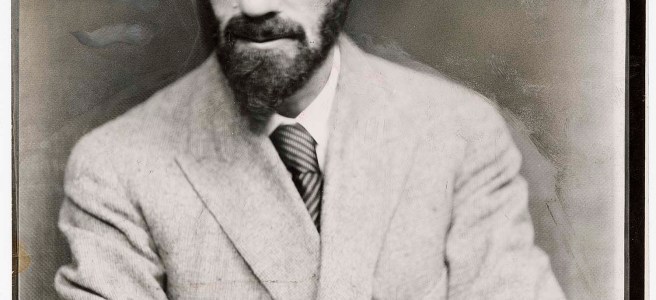
The rind and the fruit.

In D.H. Lawrence’s writings, he describes the rind and the fruit as metaphor.

When one peels the rind, therein the fruit is tender, retaining its juices and seeds. Within is life, the bursting seed awaiting implantation into the soil and the redolent waves of the sun nurturing it into budding. The rind merely peels away. It is discarded. It becomes mold in the earth.

Lawrence writes of the rind in Women In Love after Anna and Will marry. They enjoy honeymoon bliss in a little cottage, absorbed in each other. All is soothing and complacent to compassion. They are, for lack of a better word, complete. Will is born anew:

He surveyed the rind of the world: houses factories, trams, the discarded rind; people scurrying about, work going on, all on the discarded surface. An earthquake (the marriage) had burst it all from the inside. It was as if the surface of the world had been broken away entirely: Ilkeston, streets, church, people, work, rule-of-the-day, all intact; and yet peeled away into unreality, leaving here exposed the inside, the reality; one’s own being, strange feelings and passions and yearnings and beliefs and aspirations, suddenly become present, revealed to the permanent bedrock, knitted one rock with the woman one loved.”

As Will slips into blissful dreamland, Anna plans a tea-party which throws Will into a tizzy.

The wonder was going to pass away again. All the love, the magnificent new order was going to be lost, she would forfeit it all for the outside things. She would admit the outside world again, she would throw away the living fruit for the ostensible rind. He began to hate this in her.

This reveals the differences between the two. She longs for outside things, the rind; he, for the living fruit that is them. It is not the tea-party per se that becomes the issue, but that the trifling matter becomes portentous of their future.

Lawrence’s metaphor of the rind is a tool for his philosophy.

This goes on within the rind. But the rind remains permanent, falsely absolute, my false absolute knowledge of good and evil. Till the work of corruption is finished; then the rind also, the public form, the civilization, the established consciousness of mankind disappears as well in the mouth of the worm, taken unutterably asunder by the hands of the angels of separation. It ceases to be, all the civilization and all the consciousness, it passes utterly away, a temporary cohesion in the flux. It was this, this rind, this persistent temporary cohesion, that was evil, that alone was evil. And it destroys us all before itself is destroyed.”

Lawrence’s “rind” is the origin of evil. It is the hope one settles for after glimpsing the rainbow, but instead takes refuge in the “rind of the world.”

Whatever form the rind appears, it must be dismantled or diminished in order to reach the fruit of the matter.

It became at last,” writes Lawrence, “a collective activity, a war, when, within the great rind of virtue we thresh destruction further and further, till our whole civilization is like a great rind full of corruption, o breaking down, a mere shell threatened with collapse upon itself.”

Then …

And the road of corruption leads back to one’s eternity.

Lawrence indulges in the fruit, where the wet pulp and soft seeds are rapacious with the sweet and bitter pulp of destiny and promulgation.

It is in his poem, “Pomegranate” that he declares:

You tell me I am wrong.
Who are you, who is anybody to tell me I am wrong?
I am not wrong.

The fleshly seeds of the pomegranate are matters of truth that remain obstinate in the light of falsity.

Or when Lawrence writes in “Figs”:

Folded upon itself, and secret unutterable,
And milky-sapped, sap that curdles milk and makes ricotta,
Sap that smells strange on your fingers, that even goats won’t taste it ;
Folded upon itself, enclosed like any Mohammedan woman,
Its nakedness all within-walls, its flowering forever unseen,
One small way of access only, and this close-curtained from the light ;
Fig, fruit of the female mystery, covert and inward,
Mediterranean fruit, with your covert nakedness,
Where everything happens invisible, flowering and fertilization, and fruiting
In the inwardness of your you, that eye will never see
Till it’s finished, and you’re over-ripe, and you burst to give up your ghost.

The cloying sweetness, its feminine essence overpowers the senses. It is all that it should be. The fruit is declarative and profound. We are righted by its righteousness and journey. The fig’s rind is peeled away and the pulp opens up sweetly with its ferment. It rewards the tongue with its truth. It rewards the soil with its seed.

The crux of the matter lies in the fruit, not the rind. The rind is the world, that binding shell that colludes the real fruit of the matter. It is rioting in Charlottesville, it is nukes in North Korea, it is the pettiness of everyday squabbles, and earthly battles we pursue instead of the living fruit of who we are and what we contain. It is this Lawrence warns of … where “the tiger rises supreme, the last brindled flame upon the darkness; the deer melts away, a bloodstained shadow received into the utter pallor of light; each having leapt forward into eternity, at opposite extremes.”

What is your rind? What is your fruit?

The Sons of Anak: Henry David Thoreau and John Brown

The Sons of Anak

Concord, Massachusetts – Fall 1859

“It is only when we forget all our learning that we begin to know.”
— Journal, October 4, 1859

On September 5, 1859, Concord was seasonably cool after strong winds (those that pelted the fifty-six-year-old Emerson’s yard with unripe pears),[1] prevailed two days previous. Green urgent sprouts of corn emerged from Concord’s fertile loam and pumpkins, “yellow and yellowing,” blazed the earth creating what Thoreau described as a “genuine New England scene.”[2]

On this day, Thoreau sauntered through the Acton woods searching for a millstone suitable for crushing plumbago into the fine powder he sold to electrotyping firms. (An advertisement in local newspapers of the day states: “PLUMBAGO Prepared EXPRESSLY FOR ELECTROTYPING by JOHN THOREAU, PENCIL MAKER, CONCORD MASS.”) The business was a responsibility inherited (along with the lead mill) solely by Thoreau after the passing of John Sr. in February 1859. Within the first weeks of that year, Thoreau had initiated a period that would begin and end with the presence of death, that of his father and, in December, a distant acquaintance named John Brown.

Read the rest of my new essay on Henry David Thoreau at EMPTY MIRROR.

There’s Nothing Like a Cheap Paperback …

I believe a cheap paperback of great literature dresses up a book shelf better than overpriced hardcovers and oversized trade paperbacks… I mean just those small ones that fit right in the back of your pocket like it was always meant to be there. There’s plenty I found through my years bought for a nickel or a quarter, or maybe I stole from some flea market table where I didn’t have the dime or quarter, but the title or author drew me to such extremities. I feel guilty about that…

There’s a whole line of Faulkner paperbacks I have with split black spines and mysterious photos of a vanished America that retains the hate and desperation of its people in the American south, of fronds of Spanish Moss and blood soaking in puddles within a rutted wagon wheel path. All the Snopes and Compsons in the world took up a couple of feet on the bookshelf near The Tibetan Book of the Dead and Women In Love.

I have a really aged copy of Kerouac’s The Subterraneans sent to me from Terry Malick. He said he had it as a boy when he worked on a farm where he drove a tractor to harvest wheat. He kept it in the glove box. He told me one December evening in Austin that he “wanted to look cool,” but he never really understood the book at all. A few months back he mailed it to me with a neat inscription.

Cheap dirty paperbacks, the pages pungent of must and experience. If we could lift the prints from the cover, how many murderers and saints have clutched these titles in a search for redemption and resolution?

Maxwell Bodenheim was murdered clutching a copy of Rachel Carson’s The Sea Around Us, and as he laid there in the Bowery cold water flat, the blood sea of his heart pumped out his life essence to stain his Arrow collar shirt.

Once I rode a trolley to Tijuana from San Diego holding a thick paperback of Steinbeck’s East of Eden. I never have been able to read it the same way again, with the lift of spring flowers wafting through the air imagining the Salinas Valley.

Right here with me is a Vintage paperback of Faulkner’s Flags In the Dust with its front cover photo of a dilapidated home and Weeping Lilac Tree and I remember reading it, the first time reading Faulkner, and being entranced with the language (and this was not even vintage Faulkner in his prime!):

“They drank again. It was high ere, and the air moved with gray coolness. On either hand lay a valley filled with shadow and with ceaseless whip-poor-wills; beyond these valleys the silver earth rolled on into the sky. Across it, sourceless and mournful and far, a dog howled. Before them the lights on the courthouse clock were steadfast and yellow and unwinking in the dissolving distance, but in all other directions the world rolled away in slumbrous ridges, milkily opaline.”

These words turned me on to Faulkner, and at the time, I think it was a little bookstore in a Massachusetts mall, there was a shelf of them, all Vintage books, each equally enigmatic. Light In August had its cover of a window shade with the mysterious yellow light tinging it, and The Sound and the Fury had its little country cemetery awash in sunset blood red sky.

Pocket paperbacks: a dishwasher in Detroit washing pans with a volume of Stephen King jammed in his back pocket; a socialite reading Lolita in the back of a limousine; an old man reading Beckett on a park bench; a sailor reading Jack London’s Call of the Wild; a bored teen reading Naked Lunch. I would defer to a quality paperback of Ulysses over a grand Folio edition. In between its beat-up pulpy pages, a secret pulses like a buried ember in its bed of ashes, waiting to spark into full flame.

As a kid, we went to flea markets spread out over the lot of a drive-in theater, and there was table after table of people with books, many of them remaindered. We knew they were remaindered because they tore the front cover off, thus stripping the book of its character. Dirt cheap, then, wasn’t always better. I was weaned from young adult fiction to Stephen King back then. I distinctly remember finding an almost-newish copy of the Signet edition of Salems Lot with its slick black embossed vampire girl with that one crimson drop of blood seeping out of the corner of her mouth and no title on the cover. A collectible now, it was commonplace then … and I could never pick up the novel again, because that edition kept with it the entire mystique of the little village taken over by everyday vampires. Who could ever forget floating Danny Click in that book?

I’m not one for memory lane type of blogging, but picking up this copy of Carl Jung’s edited collection Man and His Symbols published by Dell flooded me with memories.

What’s your favorite pocket paperback book?

On a Lost/Stolen Notebook

In August 2017, I began a new notebook, handwriting in concentrated spates of a few hours at a time, all of the writing clusters having in common the character of Violet Sweet, her mother, a dying neighbor among several others. It was a journey of a pure being deriving much from Jungian traits (Aspects of the Feminine & The Sacred Prostitute). There were also items quoted at length from these 2 books and The Golden Bough, and heightened drawings of perception… alas, one day it was just no longer in my satchel bag, or in our apartment, the car, or at work. It had utterly vanished.

It made me wonder: I always have notebooks, most times they are blank as I compose directly into my laptop, eschewing the notebook as only placing effort into something that I would have to do twice (not counting drafts).

I had considered putting my name inside the notebook, with my address and its reward, should it be found, “your conscience.” However, since I place no faith on human values, I left it blank and so the work I wrote is now tossed to the dustbin of humanity in all of its glorious anonymity.

After days of frantic searching. I gave up looking for it, like a sailor lost at sea, surrendering my hopes to my memory of what it was I wrote (much of it done trance-like). Erring on the side of the power of imagination, I have a new notebook to begin the novel anew.

Maybe, as they say, ‘it was meant to be.’

I’ll shall see.

Even the flowers are fucked into being…

I have started reading D.H. Lawrence, starting with Lady Chatterly’s Lover before turning back to the beginning with The Trespasser, The White Peacock and now, Sons and Lovers.

I anticipated how to meet the challenge of this formidable author. How do I read something that leads toward the truth? What miracle can I tap from this body of work that could benefit me? How can life flow so effortlessly from between two covers? Reading, for me, is the greatest voyage on earth.

How do I break from the torpor of normative thinking that plagues current-day America?

Reading D.H. Lawrence unshackled me from my own conservative bent, an enterprise striving to break free from the constraints of nonfiction writing, and address the embers of creative writing stirring within. To use the words of Lawrence, how do I “fuck the flames into being”? Before, in the throes of my naive shrugging-off of English lit, I held little regard for D.H. Lawrence, until at last I read Lady Chatterly’s Lover and came across the following:

“His body was urgent against her, and she didn’t have the heart anymore to fight…She saw his eyes, tense and brilliant, fierce, not loving. But her will had left her. A strange weight was on her limbs. She was giving way. She was giving up…she had to lie down there under the boughs of the tree, like an animal, while he waited, standing there in his shirt and breeches, watching her with haunted eyes…He too had bared the front part of his body and she felt his naked flesh against her as he came into her. For a moment he was still inside her, turgid there and quivering. Then as he began to move, in the sudden helpless orgasm, there awoke in her new strange thrills rippling inside her. Rippling, rippling, rippling, like a flapping overlapping of soft flames, soft as feathers, running to points of brilliance, exquisite and melting her all molten inside. It was like bells rippling up and up to a culmination. She lay unconscious of the wild little cries she uttered at the last. But it was over too soon, too soon, and she could no longer force her own conclusion with her own activity. This was different, different. She could do nothing. She could no longer harden and grip for her own satisfaction upon him. She could only wait, wait and moan in spirit and she felt him withdrawing, withdrawing and contracting, coming to the terrible moment when he would slip out of her and be gone. Whilst all her womb was open and soft, and softly clamouring, like a sea anenome under the tide, clamoring for him to come in again and make fulfillment for her. She clung to him unconscious in passion, and he never quite slipped from her, and she felt the soft bud of him within her stirring, and strange rhythms flushing up into her with a strange rhythmic growing motion, swelling and swelling til it filled all her cleaving consciousness, and then began again the unspeakable motion that was not really motion, but pure deepening whirlpools of sensation swirling deeper and deeper through all her tissue and consciousness, til she was one perfect concentric fluid of feeling, and she lay there crying in unconscious inarticulate cries.”

Beyond the sexually-charged prose, it is Lawrence’s magical brick-laying of the human condition, that the animal act of fornication is brought to a higher level via poetry. It is elevated by the energy of language. The stirrings of the cloth bed to a higher purpose. This is church-energy hallelujah choruses stirring the masses into quickening resolve to do good against the encroaching evils of the world. Somewhere within is a Jungian dream-language resonating in the bell-towers of consciousness. Who knew the pathos of human desperation had its own language?

In The Trespasser (1912), Helena observes her illicit love Siegmund like the anemones she watches in a Isle of Wight tide pool. Siegmund is a violinist, she is his student. He is married with children. Still, he pursues his passion as determined as he attacks the violin churning out strained exasperated notes at the furthest edge of its extremities of sound. Many readers walk away from the narrative depressed by the sobering bite of the book. But it is no less depressing than our own lives when we break it down into chapters. It is the implications and consequences of adultery. It is the fragility of ego and limitations of compassion. Siegmund returns home from his weekend to find himself no less scorned than before.

Have we in the modern age even made adultery boring? One slide of the finger in Tinder and magically one has a hook-up at will. Lawrence would have bored with such effortless resolve. There’s no poetry in smartphones.

In The Trespasser, a progenitor of sorts to the Lady herself, Lawrence riffs from his source material (a friend’s journal) to explore the capabilities of language:

The sea was smoking with darkness under half luminous heavens. The stars, one after another, were catching alight. Siegmund perceived first one, and the another one flicker out in the darkness over the sea. He stood perfectly still, watching them. Gradually he remembered how, in the cathedral, the tapers of the choir-stalls would tremble and set steadily to burn, opening the darkness point-after-point with yellow drops of flame, as the acolyte touched them, one by one, delicately with his rod. The night was religious, then, with its proper order of service. Day and night had their ritual, and passed in uncouth worship.”

Such delicate improprieties are forgiven under the auspices of such charged hypnotic prose.

It is time, then, to light the candle anew, and fuck the flame into being.