On a Lost/Stolen Notebook

In August 2017, I began a new notebook, handwriting in concentrated spates of a few hours at a time, all of the writing clusters having in common the character of Violet Sweet, her mother, a dying neighbor among several others. It was a journey of a pure being deriving much from Jungian traits (Aspects of the Feminine & The Sacred Prostitute). There were also items quoted at length from these 2 books and The Golden Bough, and heightened drawings of perception… alas, one day it was just no longer in my satchel bag, or in our apartment, the car, or at work. It had utterly vanished.

It made me wonder: I always have notebooks, most times they are blank as I compose directly into my laptop, eschewing the notebook as only placing effort into something that I would have to do twice (not counting drafts).

I had considered putting my name inside the notebook, with my address and its reward, should it be found, “your conscience.” However, since I place no faith on human values, I left it blank and so the work I wrote is now tossed to the dustbin of humanity in all of its glorious anonymity.

After days of frantic searching. I gave up looking for it, like a sailor lost at sea, surrendering my hopes to my memory of what it was I wrote (much of it done trance-like). Erring on the side of the power of imagination, I have a new notebook to begin the novel anew.

Maybe, as they say, ‘it was meant to be.’

I’ll shall see.

On Poe

I once laid hand on a volume of Poe, yellowed and missing the back cover, the front emblazoned the legend that it was the “Selected Tales of Edgar Allan Poe” whereupon a publishing house hack etched out a marginal likeness of the troubled writer using a blood-red crudity of lines hatched and crosshatched so that the looming visage emerged from a tapestry of naked November tree branches. I kept the volume for many years, never really reading it, but was more engaged to the scribbled marginalia peppered throughout. One such comment, “brilliant, seeding intrigue with eeriness” struck me for the relative sophomoric observation the reader had for the line lifted from “The Premature Burial”:

Methought I was immersed in a cataleptic trance of more than usual direction and profundity. Suddenly there came an icy hand upon my forehead, and an impatient, gibbering voice whispered the word “Arise!”within my ear.

Ah, but one day the book began to smell of “old” and I eschewed it with a newer volume, one of those Library of America volumes with the slick black gloss framing the tortured expression of Poe staring as he did from a hundred others of public domain appropriations from such sellers as Barnes & Noble and Borders Books, (remember those?).

Poe is a household name, an irony I guess, because I’d venture that 95% of the population that knows him has ever read anything beyond “The Raven” and “The Tell-Tale Heart” and even those two but shallow readings, like seeing the flowers but not seeing the flowers for what they are beyond perennial reminders of life and death and rebirth.

These are plebes choosing to believe a myth because it’s more interesting than the truth.

Longfellow thought Poe a plagiarist. Writing after the death of Poe: “My works seemed to give him much trouble, first and last, but Mr. Poe is dead and gone, and I am alive and still writing, and that is the end of the matter.” The great Concord sage Emerson saw little merit in Poe, calling him the “jingle man.” Poe in turn denounced Emerson a mystical fraud. Hawthorne was an admirer, though Poe had trashed his Mosses from an Old Manse: “I confess, however, that I admire you rather as a writer of tales than as a critic upon them. I might often—and often do—dissent from your opinions in the latter capacity, but could never fail to recognize your force and originality, in the former.”

But time is a great forgiver, and to Poe and all we place their works canonical and enduring. The horror and might of Poe and his pen have been bludgeoned by the jaded sensibility of our times. Poe’s wandering fancies and quicksilver mood of darks and dreams endure for the sheer ability to repackage and sensationalize a batch of works that readers of today hardly understand. I have not run into a single person that has fairly read, digested and understood the writer. He is more appreciated as a person, that is the myth of the person, than the scores of stories, essays and poetry he has written. Often anthologized, he is but a curiosity item for fledgling students as an oasis through enormous dry spells of similarly anthologized writers meditating tedium in humdrum English classes across America.

Thus, alas, the sounds of voices heard beneath the wind-caressed eaves of abandoned homes and down the stairwell, are composing poetry upon dusty banisters once stroked by generations of a family driven to annhilation. Blood scores the ink well, the feather tip’t grip of pen in hand scribbles a furious paean to a long lost America, where mystery once held sovereign sway and the earnest scrivener labored at the dictate of his imagination.

This is an essay without purpose. I feel the need to write. Writing can have no purpose. It has no more use on a Sunday morning than sugar sprinkled over a brisket. The inherent need to express and create finds its way across the landscape of the mind like a river wending its path through the topography of a strange new land. At the end there is always an ocean, and there the waters can spread and sink and rise to an eternity of waters greater than the land it sprung from.

Is that not our purpose, if it can be dignified at all?


Even the flowers are fucked into being…

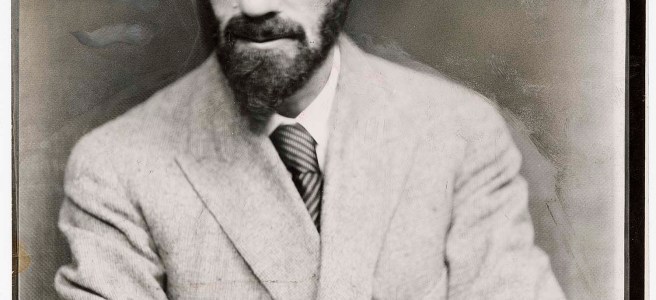
I have started reading D.H. Lawrence, starting with Lady Chatterly’s Lover before turning back to the beginning with The Trespasser, The White Peacock and now, Sons and Lovers.

I anticipated how to meet the challenge of this formidable author. How do I read something that leads toward the truth? What miracle can I tap from this body of work that could benefit me? How can life flow so effortlessly from between two covers? Reading, for me, is the greatest voyage on earth.

How do I break from the torpor of normative thinking that plagues current-day America?

Reading D.H. Lawrence unshackled me from my own conservative bent, an enterprise striving to break free from the constraints of nonfiction writing, and address the embers of creative writing stirring within. To use the words of Lawrence, how do I “fuck the flames into being”? Before, in the throes of my naive shrugging-off of English lit, I held little regard for D.H. Lawrence, until at last I read Lady Chatterly’s Lover and came across the following:

“His body was urgent against her, and she didn’t have the heart anymore to fight…She saw his eyes, tense and brilliant, fierce, not loving. But her will had left her. A strange weight was on her limbs. She was giving way. She was giving up…she had to lie down there under the boughs of the tree, like an animal, while he waited, standing there in his shirt and breeches, watching her with haunted eyes…He too had bared the front part of his body and she felt his naked flesh against her as he came into her. For a moment he was still inside her, turgid there and quivering. Then as he began to move, in the sudden helpless orgasm, there awoke in her new strange thrills rippling inside her. Rippling, rippling, rippling, like a flapping overlapping of soft flames, soft as feathers, running to points of brilliance, exquisite and melting her all molten inside. It was like bells rippling up and up to a culmination. She lay unconscious of the wild little cries she uttered at the last. But it was over too soon, too soon, and she could no longer force her own conclusion with her own activity. This was different, different. She could do nothing. She could no longer harden and grip for her own satisfaction upon him. She could only wait, wait and moan in spirit and she felt him withdrawing, withdrawing and contracting, coming to the terrible moment when he would slip out of her and be gone. Whilst all her womb was open and soft, and softly clamouring, like a sea anenome under the tide, clamoring for him to come in again and make fulfillment for her. She clung to him unconscious in passion, and he never quite slipped from her, and she felt the soft bud of him within her stirring, and strange rhythms flushing up into her with a strange rhythmic growing motion, swelling and swelling til it filled all her cleaving consciousness, and then began again the unspeakable motion that was not really motion, but pure deepening whirlpools of sensation swirling deeper and deeper through all her tissue and consciousness, til she was one perfect concentric fluid of feeling, and she lay there crying in unconscious inarticulate cries.”

Beyond the sexually-charged prose, it is Lawrence’s magical brick-laying of the human condition, that the animal act of fornication is brought to a higher level via poetry. It is elevated by the energy of language. The stirrings of the cloth bed to a higher purpose. This is church-energy hallelujah choruses stirring the masses into quickening resolve to do good against the encroaching evils of the world. Somewhere within is a Jungian dream-language resonating in the bell-towers of consciousness. Who knew the pathos of human desperation had its own language?

In The Trespasser (1912), Helena observes her illicit love Siegmund like the anemones she watches in a Isle of Wight tide pool. Siegmund is a violinist, she is his student. He is married with children. Still, he pursues his passion as determined as he attacks the violin churning out strained exasperated notes at the furthest edge of its extremities of sound. Many readers walk away from the narrative depressed by the sobering bite of the book. But it is no less depressing than our own lives when we break it down into chapters. It is the implications and consequences of adultery. It is the fragility of ego and limitations of compassion. Siegmund returns home from his weekend to find himself no less scorned than before.

Have we in the modern age even made adultery boring? One slide of the finger in Tinder and magically one has a hook-up at will. Lawrence would have bored with such effortless resolve. There’s no poetry in smartphones.

In The Trespasser, a progenitor of sorts to the Lady herself, Lawrence riffs from his source material (a friend’s journal) to explore the capabilities of language:

The sea was smoking with darkness under half luminous heavens. The stars, one after another, were catching alight. Siegmund perceived first one, and the another one flicker out in the darkness over the sea. He stood perfectly still, watching them. Gradually he remembered how, in the cathedral, the tapers of the choir-stalls would tremble and set steadily to burn, opening the darkness point-after-point with yellow drops of flame, as the acolyte touched them, one by one, delicately with his rod. The night was religious, then, with its proper order of service. Day and night had their ritual, and passed in uncouth worship.”

Such delicate improprieties are forgiven under the auspices of such charged hypnotic prose.

It is time, then, to light the candle anew, and fuck the flame into being.

Manifesto #2

18950989_1482099938519276_1743267289057193507_n

1. I will not allow you (society) to enter the sacred church of my mind. You will not penetrate me in ways that are preventable by me.

2. Though the world seeks to harm you Mother Nature, I will be beholden to you always, and celebrate your Goodness through the sacred vestals of poetry, film, photography, writing and calm meditation.

3. Meditate my creativity.

4. Create my meditations.

5. Nobody has me for free but my beloved and my children.

6. Do not pollute mind or body with corporate mentality.

7. Make every moment meaningful, every intention purposed.

8. Remain awash in tidal flats of peace and harmony. The waters that wash over them will be remediated by calm.

9. I will not mold my body from laxity and repose, but through strength and endurance.

10. I will not wallow in negativity. Nobody deserves to hear it, I do not deserve to be subdued by it.

11. Live to create.

12. Create to live.

13. Love always.