Startled Mirror

Once I was a child I looked upon the world as an eyeflash of hope – shatters of stars thrown across the night sky, I said to myself that that is where I will be someday.

that is where I’ll be someday

And that I wondered about those stars, and wrote on papers, multiplying my age by tens and wondering where I would be at each point, who would I be? who would I love? who would love me? and I wondered if I would be rich? well-liked? Poor? Scorned?

I had no fears. I loved the world, even when I felt they did not love me back.

But then the first of those decades struck me – a strange ruffling wind tossing me over the sea under a night sky born anew and still there was hope because hope had yet to be born, writhing in its placenta, rueing a fierce-eyed tenacious grip, clinging to a vestige of what I felt to be the right path.

However, that path was but illusion. I walked it fearlessly, regardless of destiny. I had youth on my side, and in youth there are days to burn like tinder, one twig after another until the pile becomes depleted and we scrounge for more to keep the fire burning.

And then the people came, because I had never noticed them before. They had faces that all looked alike, as they do now, not any of significance, but rejoicing in their commonality, the pale fish-eyed thin-lipped galley slaves rowing to the rhythm of commerce, to each wanting the glimmering sheaf of light on the other shore, the other shore not their freedom, or their salvation, but what they can own, what they can have, driving picket fences into the earth to shut others out and bloat flatulently under rich fruit trees regarded itself as a bounty of the earth, and not the property of a tenant. And the ripe fruit drops and decays into the earth.

The dreams of the child become the dashed hope of the ogre-spector of adulthood. Eyes are grim, skin turns to gray, wrinkles crease a riverbed of woes across the astonished face and others, and even others still, use that frightened disbelief as another peg for commerce. Ah! With those fears, like many others, I can capitalize on vanity, insecurity and old age. I eat greed with my lust, eat lust with my greed. On Sundays I pray to be a better person, so that I can step back into the poisoned river and begin my workweek anew.

The child that wondered stands at the precipe of decades later, astonished still at his reflection, that of the startled mirror unmitigating in its refusal to reflect what we want to see. We have allowed ourselves to become slaves to numbers.

Age is our whipping post.

It has become the monster at the end of our youthful dreams. The Hegira from child to adult is but a trail of glass-shattered tears.

He turns. Lights off. Dreams no longer a melodious cargo, but an embargo on our past, taxed and regulated for the blank-face masses. We drag our feet to the grave and stand looking down into an open stinking pit. The moneymakers are waiting to push you in and take more. We have allowed ourselves to be vessels for others to capitalize on, from the individual to that Hydra called government.

Astonished we have no other recourse but to step in.

Let Me Show You …

Let me show you, she said.

She sat on the bed and opened a shoe box and removed a handful of photographs, dustwiping two and offered them smiling: a little girl on a horse; a woman seafoamed and glittering sprinting in the hot sand. ‘These are me,’ she said in a cloud of yellow morning, breathing in hot rushes an infold of warm colors and darkness and light.

She was so there she was so there … ‘these are me,’ and she knowing already that was once was, now was no more except what was captured photographically, almost a betrayal, to defy the past.

Silhouetted she entered. I smelled her before seeing her felt her before I knew her – perfume hangs the air aura-like.

I entered and saw her before I smelled her and knowing it was her and so I closed the door to her closed the door to her…

Fred accosts me on the street and asks about real estate prospects. I cannot entertain his earthly offers, your head must be in the sun, my friend, and I tell him of her, and that she is not here, she is there, across the way standing at the coastline where the picture was taken, and so I look across to a sea rush roar seducing a chain of broken islands and she is waving in the high dark where the foghorn soaks a somber deathblow bellow….

I wade to follow through a street of strangers, a sea of strangers an irrepressible tide of unkindly strangers amassed in colors and hostile energy, billowing folds of a cloth stirred by wafts of dirty hot air rushing toward me, through me searching through this world.

Is she here?

from The Malady of Death

Marguerite Duras says “in heterosexual love there’s no solution. Man and woman are irreconcilable, and it’s the doomed attempt to do the impossible, repeated in each new affair, that lends heterosexual love its grandeur.”

from Marguerite Duras’s The Malady of Death:

If I ever filmed this text I’d want the weeping by the sea to be shot in such a way that the white turmoil of the waves is seen almost simultaneously with the man’s face. There should be a correlation between the white of the sheets and the white of the sea. The sheets should be a prior image of the sea. All this by way of general suggestion.

The Malady of Death is a moving, erotic story that explores the relationship between sex, love, and death. The book is really about a soul which has died and its means of finding love through (as it seems) “meaningless” sex, often in complete silence, a strange kind of voiceless ecstasy. A man (whom the author addresses as “you”) hires a woman to spend several weeks with him by the sea where he suffers and longs to feel something, anything, in that brief period of time. The language of the text is what I would expect from Marguerite Duras: terse yet lyrical prose, moving in the way it injects simple, familiar words with the weight of emptiness and passion and suffering. I could read this book again and be moved in the same way as I was the first time. The most remarkable exchange between the man and women occurs here, perhaps my favorite lines in the entire work: “You ask how loving can happen–the emotion of loving. She answers: Perhaps a sudden lapse in the logic of the universe. She says: Through a mistake, for instance. She says: Never through an act of will. You ask: Could the emotion of loving come from other things too? She says: It can come from anything, from the flight of a night bird, from a sleep, from a dream of sleep, from the approach of death, from a word, from a crime, of itself, oneself, often without knowing how.”

On Channeling

I tell Caitlin that I “have to channel for a minute,” and begin to write, with a gathering of strange Blakean energies gather forces to launch front he tip of my tongue through my fingers and I see nothing else but what I am thinking to write, that certainly will be come a most splendid misfire, or the touchstone to some other idea, that I believe it could humble me, or even alienate me, but none the less it stays sincere and moves through the channels of the heart, there I confess through my dictate the winding and churning of an idea seeded by emotion and watered by innovation, there can be nothing else as intermediary, it can only be encouraged like wet desire and the prodding of a child through the doorway into the world…

Writing becomes an act in itself, not the night or its stars, or the sea and its waves, but the page and its words rolling back ever-certain, ever-urged toward its own shore, breaking at frothy import the intention of its well-aimed volley.

Or it misfires.

But in accidents there lies the most important discoveries. Here in the world I cocoon myself within, I harness the silken thread of divine thoughts invincible.

The result is a page broken and tumbled, like a fallen statue that once held its subject to a loftier aim, but now, reduced to rubble, foiled, only to resurrect

in time

its time

will you be there for me

will you be there

will you?

[Update] Lost Notebook is Found

I evidently left it in a break room at work. Maybe people read it, maybe not? There’s something to say for having messy handwriting, that only the most determined will try to wade through a slew of retrograde cursive…

So, was it so important? Yes, to me it was.

Maybe an excerpt:

In a cave she walked after turning away, and the old man followed, walking his dog whose snout skimmed the wet sand and the rolling cold wash of the sea. The cove was set away from the beach proper, where large glacial erratics had been rolled into place to form a getty that stretched out about one-quarter mile into the sea.

As she strolled, her bare thighs wet with the splash of waves that deliciously licked them, her toes touched her shadows. Her feet were stark white under the sun. She did not look back. She knew already that he would follow abidingly, as readily as the dog. By the time she reached the getty, she began her ascent over the stones.

The old man stopped, unwilling at first to climb, but to stand and watch her lift her long tawny legs over the wet-dark boulders. The sea rolled around the old man’s shins and then his knees. The dog moved further away. He dropped the leash. The dog walked several feet away and sat squarely on its wet haunches shivering.

On the highest stone she stood looking at the sun, her neck craned and cheek tilted, feeling warm fingers trace the fineries of her hot skin. She closes her eyes listening to the sea. The bubbling gurgle between the rocks and the slapping hiss of the incoming tide began to sweep over the furthest reach of the getty.

For several minutes she stayed that way, as if in adoration or invocation to a god or some such pagan idolatry. Her hands unfastened the first of her garments. The straps of a thin top slipped off and dropped in a heap on the rock, her small breasts leaning into the hand of the hot sun. A strange thrill of union to her grand lineage, of legions of others like her stretched to the ancients in blind obedience to the equinox, thrilled her.

The whiteness of her face, like fire illuminating parchment, and eyes shining with no fixed color, but of all colors, and then lids rapturously closed as she sat with knees drawn like Venus in her grove, fixed to her supine posture, breasts upthrusted and sprayed of shining droplets from hand-tossed Atlantis waves, she slowly emptied a sigh into the unerring wind.

There was no mother, father, man or woman, but only the elements desirous of her as if all of it served in slavish devotion to her and her alone…”

Thanks for reading…

On a Lost/Stolen Notebook

In August 2017, I began a new notebook, handwriting in concentrated spates of a few hours at a time, all of the writing clusters having in common the character of Violet Sweet, her mother, a dying neighbor among several others. It was a journey of a pure being deriving much from Jungian traits (Aspects of the Feminine & The Sacred Prostitute). There were also items quoted at length from these 2 books and The Golden Bough, and heightened drawings of perception… alas, one day it was just no longer in my satchel bag, or in our apartment, the car, or at work. It had utterly vanished.

It made me wonder: I always have notebooks, most times they are blank as I compose directly into my laptop, eschewing the notebook as only placing effort into something that I would have to do twice (not counting drafts).

I had considered putting my name inside the notebook, with my address and its reward, should it be found, “your conscience.” However, since I place no faith on human values, I left it blank and so the work I wrote is now tossed to the dustbin of humanity in all of its glorious anonymity.

After days of frantic searching. I gave up looking for it, like a sailor lost at sea, surrendering my hopes to my memory of what it was I wrote (much of it done trance-like). Erring on the side of the power of imagination, I have a new notebook to begin the novel anew.

Maybe, as they say, ‘it was meant to be.’

I’ll shall see.

Even the flowers are fucked into being…

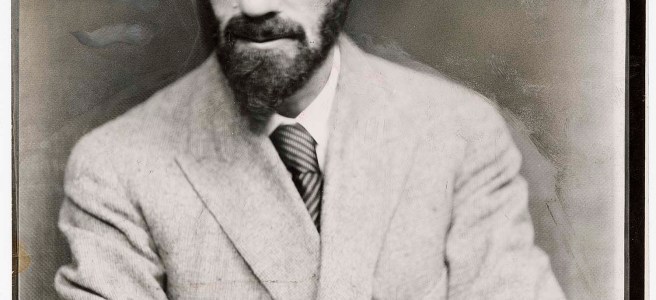
I have started reading D.H. Lawrence, starting with Lady Chatterly’s Lover before turning back to the beginning with The Trespasser, The White Peacock and now, Sons and Lovers.

I anticipated how to meet the challenge of this formidable author. How do I read something that leads toward the truth? What miracle can I tap from this body of work that could benefit me? How can life flow so effortlessly from between two covers? Reading, for me, is the greatest voyage on earth.

How do I break from the torpor of normative thinking that plagues current-day America?

Reading D.H. Lawrence unshackled me from my own conservative bent, an enterprise striving to break free from the constraints of nonfiction writing, and address the embers of creative writing stirring within. To use the words of Lawrence, how do I “fuck the flames into being”? Before, in the throes of my naive shrugging-off of English lit, I held little regard for D.H. Lawrence, until at last I read Lady Chatterly’s Lover and came across the following:

“His body was urgent against her, and she didn’t have the heart anymore to fight…She saw his eyes, tense and brilliant, fierce, not loving. But her will had left her. A strange weight was on her limbs. She was giving way. She was giving up…she had to lie down there under the boughs of the tree, like an animal, while he waited, standing there in his shirt and breeches, watching her with haunted eyes…He too had bared the front part of his body and she felt his naked flesh against her as he came into her. For a moment he was still inside her, turgid there and quivering. Then as he began to move, in the sudden helpless orgasm, there awoke in her new strange thrills rippling inside her. Rippling, rippling, rippling, like a flapping overlapping of soft flames, soft as feathers, running to points of brilliance, exquisite and melting her all molten inside. It was like bells rippling up and up to a culmination. She lay unconscious of the wild little cries she uttered at the last. But it was over too soon, too soon, and she could no longer force her own conclusion with her own activity. This was different, different. She could do nothing. She could no longer harden and grip for her own satisfaction upon him. She could only wait, wait and moan in spirit and she felt him withdrawing, withdrawing and contracting, coming to the terrible moment when he would slip out of her and be gone. Whilst all her womb was open and soft, and softly clamouring, like a sea anenome under the tide, clamoring for him to come in again and make fulfillment for her. She clung to him unconscious in passion, and he never quite slipped from her, and she felt the soft bud of him within her stirring, and strange rhythms flushing up into her with a strange rhythmic growing motion, swelling and swelling til it filled all her cleaving consciousness, and then began again the unspeakable motion that was not really motion, but pure deepening whirlpools of sensation swirling deeper and deeper through all her tissue and consciousness, til she was one perfect concentric fluid of feeling, and she lay there crying in unconscious inarticulate cries.”

Beyond the sexually-charged prose, it is Lawrence’s magical brick-laying of the human condition, that the animal act of fornication is brought to a higher level via poetry. It is elevated by the energy of language. The stirrings of the cloth bed to a higher purpose. This is church-energy hallelujah choruses stirring the masses into quickening resolve to do good against the encroaching evils of the world. Somewhere within is a Jungian dream-language resonating in the bell-towers of consciousness. Who knew the pathos of human desperation had its own language?

In The Trespasser (1912), Helena observes her illicit love Siegmund like the anemones she watches in a Isle of Wight tide pool. Siegmund is a violinist, she is his student. He is married with children. Still, he pursues his passion as determined as he attacks the violin churning out strained exasperated notes at the furthest edge of its extremities of sound. Many readers walk away from the narrative depressed by the sobering bite of the book. But it is no less depressing than our own lives when we break it down into chapters. It is the implications and consequences of adultery. It is the fragility of ego and limitations of compassion. Siegmund returns home from his weekend to find himself no less scorned than before.

Have we in the modern age even made adultery boring? One slide of the finger in Tinder and magically one has a hook-up at will. Lawrence would have bored with such effortless resolve. There’s no poetry in smartphones.

In The Trespasser, a progenitor of sorts to the Lady herself, Lawrence riffs from his source material (a friend’s journal) to explore the capabilities of language:

The sea was smoking with darkness under half luminous heavens. The stars, one after another, were catching alight. Siegmund perceived first one, and the another one flicker out in the darkness over the sea. He stood perfectly still, watching them. Gradually he remembered how, in the cathedral, the tapers of the choir-stalls would tremble and set steadily to burn, opening the darkness point-after-point with yellow drops of flame, as the acolyte touched them, one by one, delicately with his rod. The night was religious, then, with its proper order of service. Day and night had their ritual, and passed in uncouth worship.”

Such delicate improprieties are forgiven under the auspices of such charged hypnotic prose.

It is time, then, to light the candle anew, and fuck the flame into being.

Manifesto #2

18950989_1482099938519276_1743267289057193507_n

1. I will not allow you (society) to enter the sacred church of my mind. You will not penetrate me in ways that are preventable by me.

2. Though the world seeks to harm you Mother Nature, I will be beholden to you always, and celebrate your Goodness through the sacred vestals of poetry, film, photography, writing and calm meditation.

3. Meditate my creativity.

4. Create my meditations.

5. Nobody has me for free but my beloved and my children.

6. Do not pollute mind or body with corporate mentality.

7. Make every moment meaningful, every intention purposed.

8. Remain awash in tidal flats of peace and harmony. The waters that wash over them will be remediated by calm.

9. I will not mold my body from laxity and repose, but through strength and endurance.

10. I will not wallow in negativity. Nobody deserves to hear it, I do not deserve to be subdued by it.

11. Live to create.

12. Create to live.

13. Love always.